

If you’re getting ready for your first jump, one question comes up more than almost any other: is there a weight limit for tandem skydiving? The short answer is yes. Here’s exactly why it exists, what the typical range looks like, and what to do if you’re close to it.
Is There a Weight Limit for Tandem Skydiving?
Yes. Nearly every drop zone in the country enforces a tandem skydiving weight limit, and for good reason — it’s not an arbitrary rule, it’s built around what the equipment can safely handle. There’s no minimum weight to skydive, only a minimum age (18 in the U.S.), so the limit only works in one direction.
What Is the Average Tandem Skydiving Weight Limit?
Across the industry, the weight limit for tandem skydiving typically falls between 220 and 250 pounds (100 to 113 kg), though the exact number varies by drop zone and by the gear they use.
| Measurement | Typical Range |
|---|---|
| Pounds | 220–250 lbs |
| Kilograms | 100–113 kg |
| Minimum weight | None |
| Minimum age | 18 years old |
Some centers also apply a surcharge for jumpers above a certain threshold rather than an outright cutoff — it’s always worth confirming the specific policy before you book.
Why Does a Weight Limit Exist in the First Place?
The weight limit for tandem skydiving isn’t about appearance or fitness — it comes down to hard equipment specifications:
- FAA-certified gear. Every tandem parachute system carries a Technical Standard Order (TSO) from the FAA, which sets a maximum suspended weight — usually around 500 lbs total, covering the student, the instructor, and the rig itself.
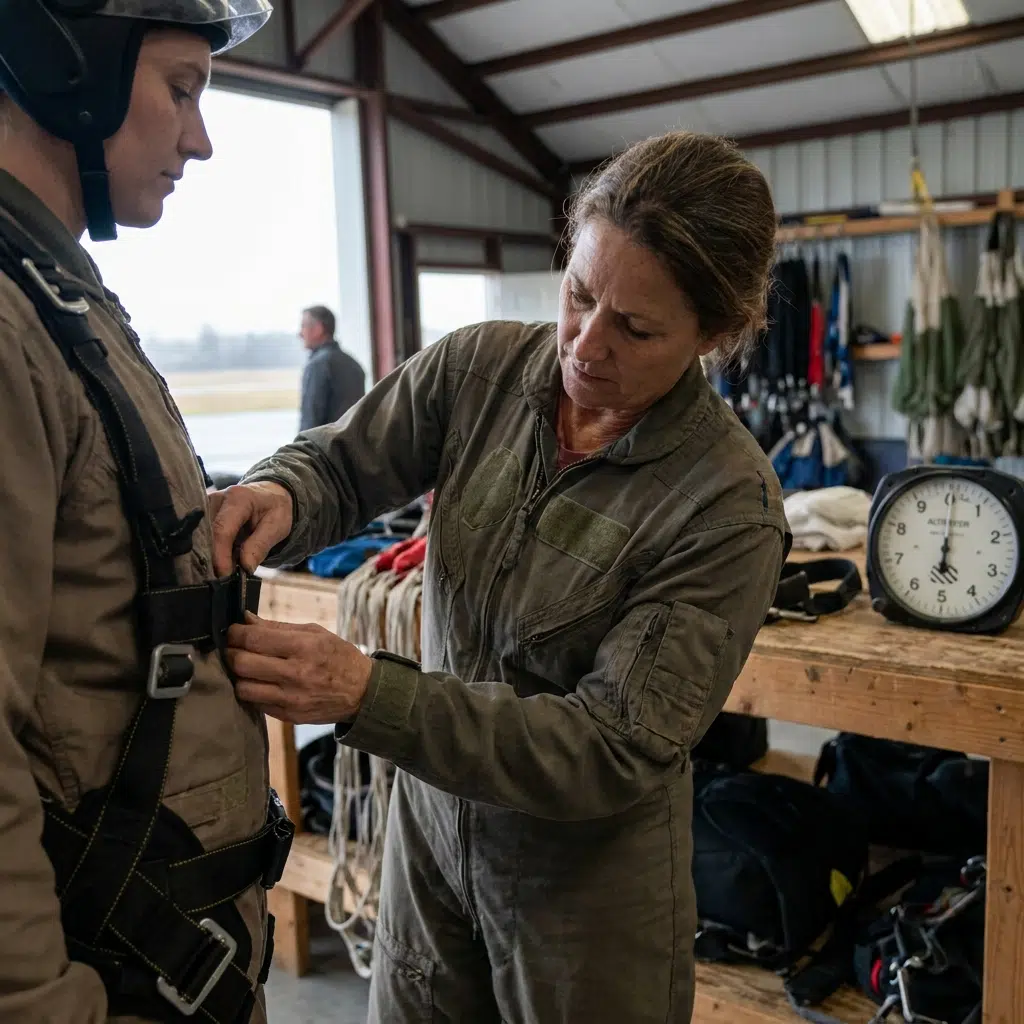
- Harness fit. The harness has to adjust securely to a wide range of body types, but only within a certain margin. A poor fit isn’t just uncomfortable, it’s a safety issue during exit and landing.
- Parachute deployment. The heavier the combined weight under the canopy, the harder and faster the opening — and the tougher the landing is to control.

Height and Weight Proportion Matter Too
Two people can weigh exactly the same and fit a tandem harness completely differently depending on height. That’s why some jumpers under the posted weight limit for tandem skydiving may still need an on-site fit check, while others closer to the limit but well-proportioned have no issue at all. If you’re planning a skydiving new jersey trip this season, it’s worth mentioning your height and weight when you book, so the team can flag anything ahead of time rather than at check-in.
What Happens If You’re Over the Weight Limit?
Policies vary. Some drop zones will simply decline the jump; others apply a per-pound surcharge to cover the added physical demand on the instructor. If you’re unsure whether you qualify, the most reliable move is to call ahead — guessing based on a generic chart isn’t worth risking a wasted trip.
Weight is only one piece of the planning puzzle, too. Knowing the best time of year to skydive in New Jersey matters just as much for visibility, temperature, and overall comfort on jump day.
Frequently Asked Questions
Is there a weight limit for tandem skydiving?
Yes — most U.S. drop zones cap tandem students between 220 and 250 lbs, based on FAA-certified equipment limits.
What’s the tandem skydiving weight limit in kg?
Roughly 100 to 113 kg, depending on the drop zone and gear manufacturer.
Is there a minimum weight for skydiving?
No. There’s no minimum weight requirement — only a minimum age of 18.
Do they weigh you before skydiving?
Yes. Most drop zones weigh jumpers privately at check-in to confirm they fall within the posted limit.
Can I still skydive if I’m slightly over the limit?
Sometimes, with a surcharge or a harness fit check — but it depends entirely on the individual drop zone’s policy, so confirm directly before booking.